|
The pulse
is the heart rate (number of heart beats in one
minute). It is always expressed as
beats-per-minute, or BPM.
While you
certainly can count the number of beats over an
entire minute, most people will shorten the
process:
-
# of
beats in 30 seconds, doubled to give the
1-minute rate.
-
# of
beats in 15 seconds, multiplied by 4 to give
the 1-minute rate.
-
# of
beats in 10 seconds, multiplied by 6 to give
the 1-minute rate.
-
# of
beats in 6 seconds, multiplied by 10 to give
the 1-minute rate.
The last of these is the fastest and easiest,
but least accurate. When there is a need for an
absolutely precise pulse measurement, count for
a full 60 seconds.
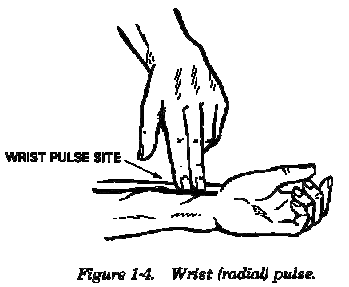
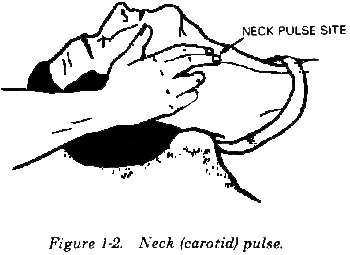
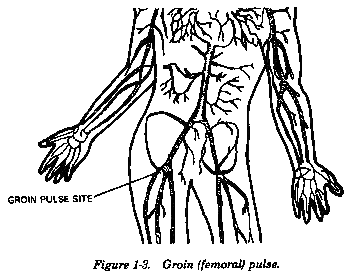
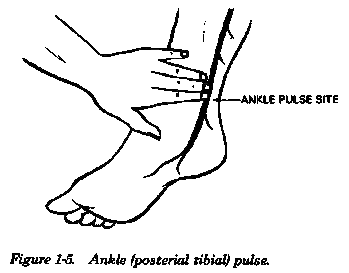
The pulse may be obtained from a number of
areas, including the wrist (radial artery), neck
(carotid artery), groin (femoral artery), or
foot (dorsalis pedis artery). Any place where
you can feel, hear, or visualize a pulsation can
be used.
The presence of a pulse in certain body areas
correlates reasonably well with the following
blood pressures:
| Location of Pulse |
Systolic BP is at least: |
| Wrist |
80 mm |
| Neck |
60 mm |
| Groin |
70 mm |
| Foot |
90 mm |
. |